
There is something quietly satisfying about growing something with your own hands. You place a seed into the soil, water it, check on it a little too often, and then one morning, almost like a small miracle, a green shoot appears. It is a simple thing, but it changes the way you look at food, seasons, weather, and even your own patience.
Starting a home garden can feel intimidating at first. You might think you need a large backyard, expensive tools, perfect soil, or years of experience. But most home gardens begin much more simply than that. They often start with a few pots on a balcony, a small patch near the fence, or a sunny corner of the yard that has been waiting for attention.
The truth is, gardening is less about doing everything perfectly and more about learning to pay attention. Plants tell you a lot if you slow down enough to notice. Leaves droop when they are thirsty. Soil cracks when it is too dry. Seedlings lean toward the light. A garden becomes a kind of conversation, and the more you listen, the better you become.
Start With the Space You Already Have
Before buying seeds, plants, gloves, or tools, spend a few days simply observing your space. This might sound too basic, but it is one of the most useful things a beginner can do.
Notice where the sun falls in the morning. Watch which areas stay shaded in the afternoon. See where rainwater collects after a storm. If you live in an apartment, look at your balcony or windowsill during different times of the day. A successful garden starts with understanding the conditions you already have, rather than forcing plants into places where they will struggle.
Most vegetables and herbs need several hours of direct sunlight each day. Tomatoes, peppers, cucumbers, basil, and many flowering plants love bright light. Leafy greens like lettuce, spinach, and parsley can usually tolerate a bit more shade. If your space is not very sunny, that does not mean you cannot garden. It simply means you should choose plants that match your environment.
This is where many beginners make their first mistake. They choose plants based on what they like to eat or how pretty something looks in a picture, without thinking about whether their space can actually support it. Gardening becomes much easier when you work with your conditions instead of against them.
If you only have a balcony, containers are your best friend. A few deep pots can hold herbs, cherry tomatoes, strawberries, or even small peppers. If you have a yard, you can begin with one small bed rather than trying to transform the entire space at once. A garden does not need to be large to be meaningful. In fact, smaller gardens are often better for beginners because they are easier to manage and less overwhelming.
Choose Plants That Encourage You
Your first garden should give you confidence. That is why it is better to begin with forgiving, rewarding plants.
Herbs are a wonderful place to start. Basil, mint, parsley, rosemary, and thyme can make even a small kitchen feel connected to the garden. There is also something very motivating about using your own herbs in a meal. A few basil leaves on pasta or fresh mint in tea can make you feel like your garden is already giving something back.
Leafy greens are also beginner-friendly. Lettuce, arugula, and spinach grow fairly quickly, and you do not always have to wait for the entire plant to mature. You can harvest a few outer leaves and let the rest continue growing. This teaches you one of the nicest lessons in gardening: harvesting does not always mean ending something. Sometimes it means encouraging more growth.
Radishes are another good choice because they grow fast. For a beginner, speed matters. Waiting months for results can be discouraging, but seeing progress in just a few weeks keeps you interested. Cherry tomatoes are slightly more demanding, but they are very rewarding if you have enough sun. Watching the fruit slowly turn from green to red is one of those small pleasures that makes gardening addictive.
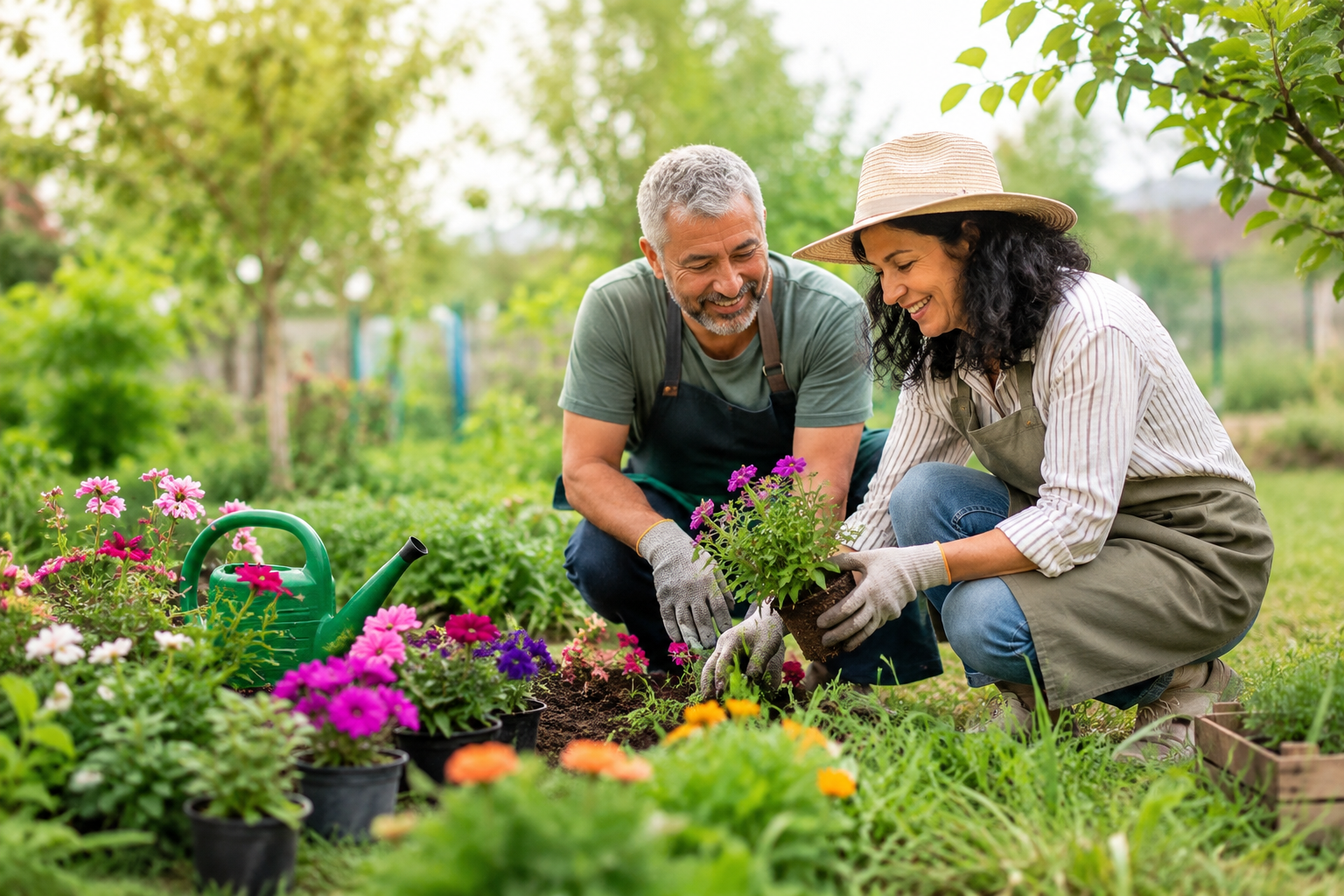
If you want flowers, marigolds, zinnias, and nasturtiums are cheerful, colorful, and not too difficult. Flowers also attract pollinators, which helps create a healthier garden overall. A home garden does not have to be purely practical. Beauty matters too. Sometimes a flower by the door can lift your mood just as much as a basket of vegetables.
Understand Your Soil Before Blaming Yourself
Many new gardeners blame themselves when plants do not grow well. They think they are “bad with plants,” but often the issue is not the person. It is the soil.
Soil is not just dirt. It is the foundation of your garden. Healthy soil holds moisture, drains well, supports roots, and contains the nutrients plants need. If the soil is too compacted, roots struggle to spread. If it drains too quickly, plants dry out. If it stays too wet, roots may rot.
A simple way to understand your soil is to touch it. Take a handful when it is slightly moist. If it forms a hard, sticky ball, it may have too much clay. If it falls apart immediately and feels gritty, it may be sandy. Good garden soil usually feels crumbly and loose, with enough structure to hold together but not so much that it becomes heavy.
For beginners, compost is one of the best improvements you can make. It adds organic matter, supports soil life, and improves texture over time. You do not need to become a compost expert immediately. Even adding store-bought compost to your garden bed or containers can make a noticeable difference.
If you are growing in pots, use a potting mix rather than regular garden soil. Garden soil can become too dense in containers, making it harder for roots to breathe. A good potting mix is lighter and designed to hold the right amount of moisture.
Think of soil as the home your plants live in. If the home is uncomfortable, the plant will struggle no matter how much you care. When you improve the soil, you make everything else easier.
Watering Is About Rhythm, Not Panic
Watering seems simple, but it is one of the most common places where beginners go wrong. Some water too much because they are afraid the plant will dry out. Others forget for days and then flood the soil all at once. Plants usually prefer consistency.
A good habit is to check the soil before watering. Push your finger about an inch into the soil. If it feels dry, water. If it still feels moist, wait. This small habit can save many plants.
When you water, try to water deeply rather than lightly sprinkling the surface. Deep watering encourages roots to grow downward, making plants stronger. Surface watering can create shallow roots that dry out quickly.
Morning is usually the best time to water because plants have the day to absorb moisture, and leaves can dry before evening. Wet leaves overnight can sometimes encourage disease, especially in crowded gardens.
Containers dry out faster than garden beds, especially in hot weather. A tomato plant in a pot on a sunny balcony may need daily watering during summer. A herb bed in the ground may need much less. Again, the key is observation. Gardening is not about following one rule forever. It is about noticing what your plants need today.
Give Plants Enough Room to Become Themselves
When seedlings are tiny, it is tempting to plant them close together. Empty soil can look wasteful, and small plants seem harmless. But plants grow into the space around them. If they are too crowded, they compete for light, water, and nutrients. Crowding also reduces airflow, which can lead to pests and disease.
This is another place where gardening teaches patience. A newly planted bed may look sparse at first, but a few weeks later, it can become full and lively. Trust the spacing instructions on seed packets or plant labels. They are not just suggestions; they are there because mature plants need room.
This idea applies beyond gardening, too. Growth needs space. If you fill every gap too early, there may be no room for things to develop properly.
Expect Mistakes and Keep Going
Every gardener loses plants. Even experienced gardeners have seedlings that fail, tomatoes that split, herbs that dry out, or pests that appear overnight. A garden is alive, which means it will never be fully under your control.
That is not a reason to quit. It is part of the process.
The best gardeners are not the ones who never make mistakes. They are the ones who notice, adjust, and try again. If your basil turns yellow, you may need to adjust watering or nutrients. If your lettuce bolts too quickly, you learn about heat. If your seedlings become weak and stretched, you learn about light.
Keep a small garden notebook if you can. Write down what you planted, when you planted it, what worked, and what did not. You do not need long entries. Even simple notes like “mint grew well in shade” or “tomatoes needed bigger pots” will help you next season.
Over time, your garden becomes a record of your attention. It remembers what you tried.
Make the Garden Part of Your Daily Life
A home garden works best when it becomes part of your routine. You do not need to spend hours outside every day. In fact, five quiet minutes in the morning can be enough.
Check the leaves. Touch the soil. Remove a weed while it is small. Notice new growth. Pick a few herbs for breakfast. These small moments build a relationship with the garden.
If you have children, involve them. Give them one plant to care for. Let them water, harvest, or decorate plant labels. Children often grasp the wonder of gardening more quickly than adults do. They are not embarrassed to be amazed by a sprout.
If you work from home, a garden can become a natural pause in your day. Instead of scrolling during a break, you can step outside and look at something real, slow, and growing. Even businesses and creators often find inspiration in gardens. Someone designing packaging, planning a local plant shop, or even creating an AI logo for a small gardening brand may find that the best ideas come from observing natural shapes, colors, and patterns.
Gardening has a way of bringing practical life and creative life together. It teaches timing, care, design, patience, and problem-solving without making a big announcement.
Do Not Rush the “Perfect Garden.”
Social media can make gardening look flawless. Perfect raised beds, matching tools, overflowing harvest baskets, and golden evening light everywhere. But real gardens are messier. Leaves get holes. Pots do not match. Some plants grow wildly while others disappoint you. That is normal.
A beginner’s goal should not be perfection. It should be a connection.
Start with what you can manage. One tomato plant, three herbs, a row of lettuce, or a few flowers near the entrance. Let your garden grow with your confidence. Next season, you can add more. Maybe you will build a raised bed, try composting, plant garlic, or experiment with companion planting. There is no need to do everything in the first year.
The most sustainable garden is the one you actually enjoy caring for.
Bring Your Own Personality Into It
Your garden does not have to look like anyone else’s. Some people love neat rows and labels. Others prefer a softer, cottage-style garden where flowers and herbs mix freely. Some want food production, while others want a peaceful corner for morning coffee.
Add small personal touches. Use handmade markers. Paint old containers. Create a herb corner near the kitchen. Plant flowers that remind you of someone. Place a chair nearby so the garden becomes a place to sit, not just a place to work.
If your gardening journey eventually turns into a small side project, community page, or local brand, your personality will matter as much as your plants. People connect with stories. A simple garden journal, a neighborhood seed swap, or a small handmade product line can all grow from the same place: genuine care. Even something as modern as an AI logo can feel more meaningful when it is guided by a real story, a clear purpose, and a love for what you are building.
Conclusion
Starting a home garden is not about becoming an expert overnight. It is about the beginning. It is about choosing a small space, paying attention to light, caring for the soil, watering with patience, and learning from whatever happens next.
Some plants will thrive. Some will not. Some days you will feel proud, and some days you will wonder what went wrong. But little by little, you will begin to understand the quiet language of your garden.
And perhaps that is the real gift. A home garden gives you more than herbs, vegetables, or flowers. It gives you a reason to slow down, observe closely, and take part in something living. You start by growing plants, but in the process, you often grow a calmer, more patient version of yourself too. For more details, Click here
